How We Skyrocketed a Swedish E-com Site
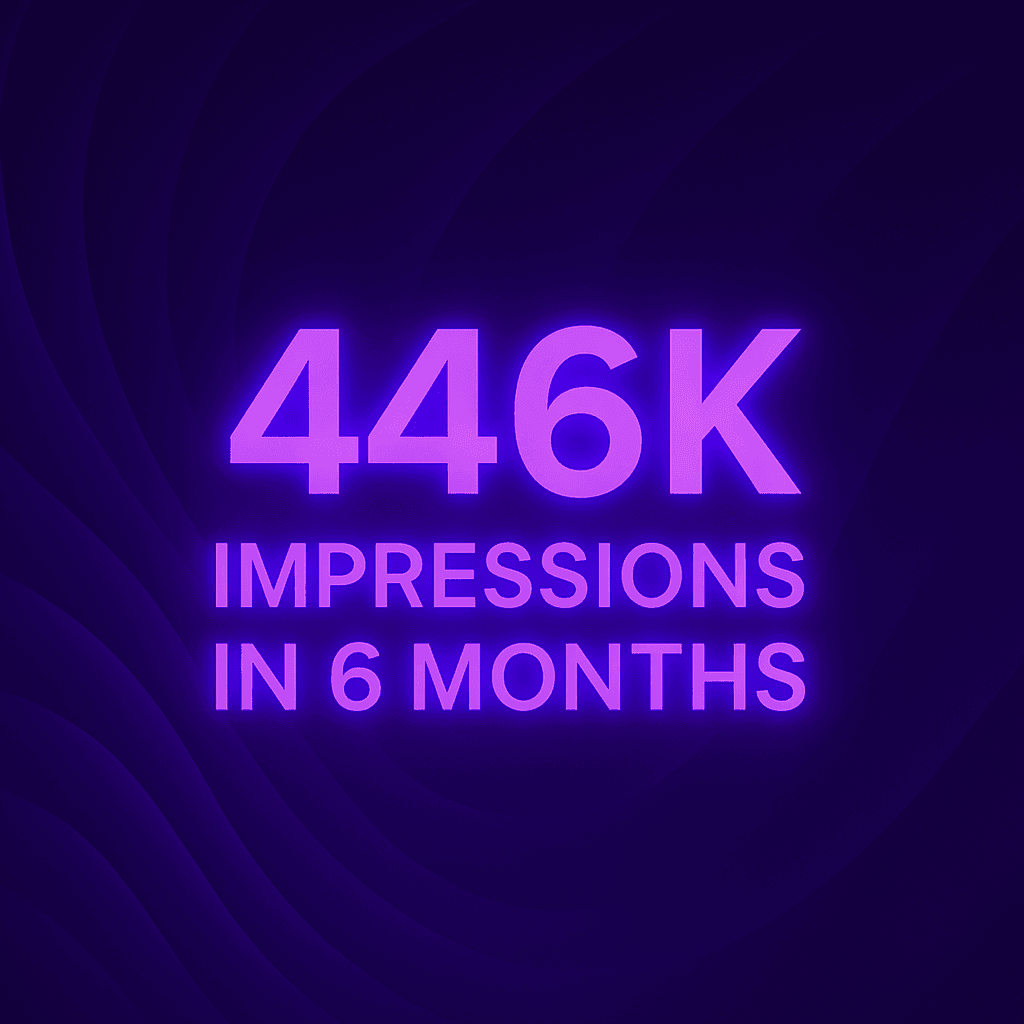
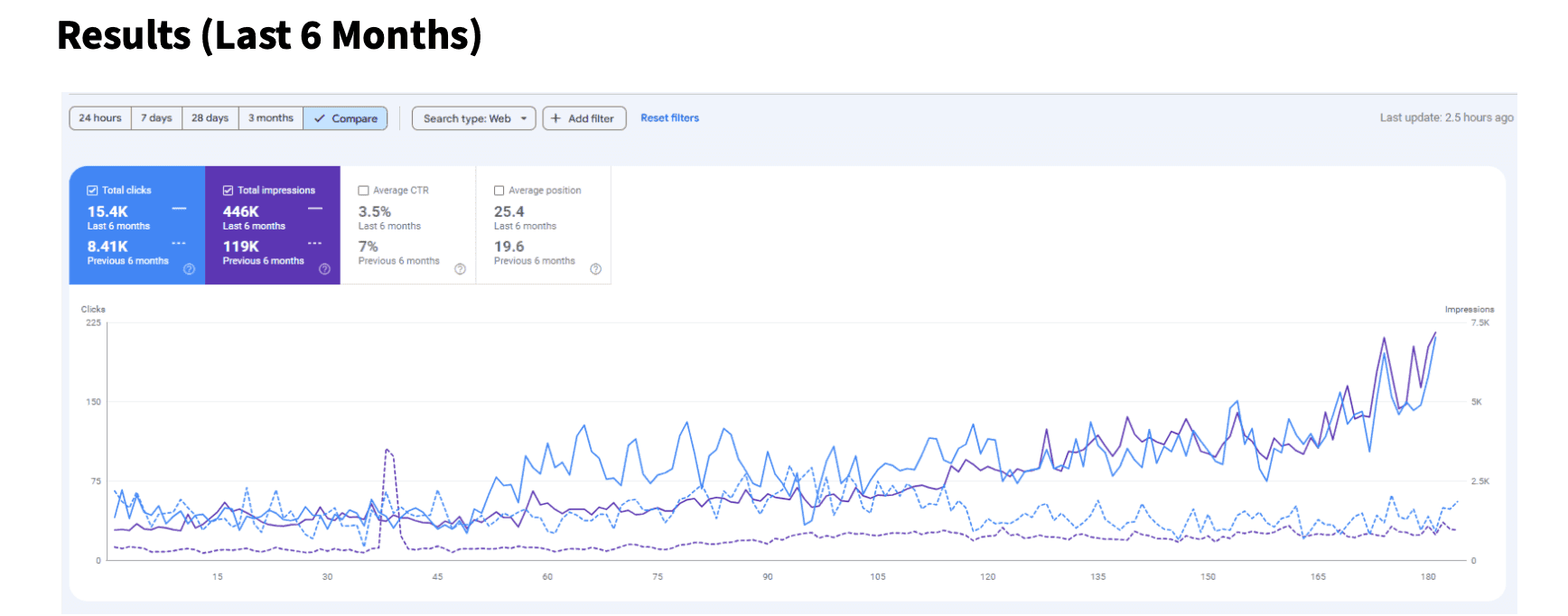
We Published 100 Pages and Grew Impressions from 119K to 446K in 6 Months
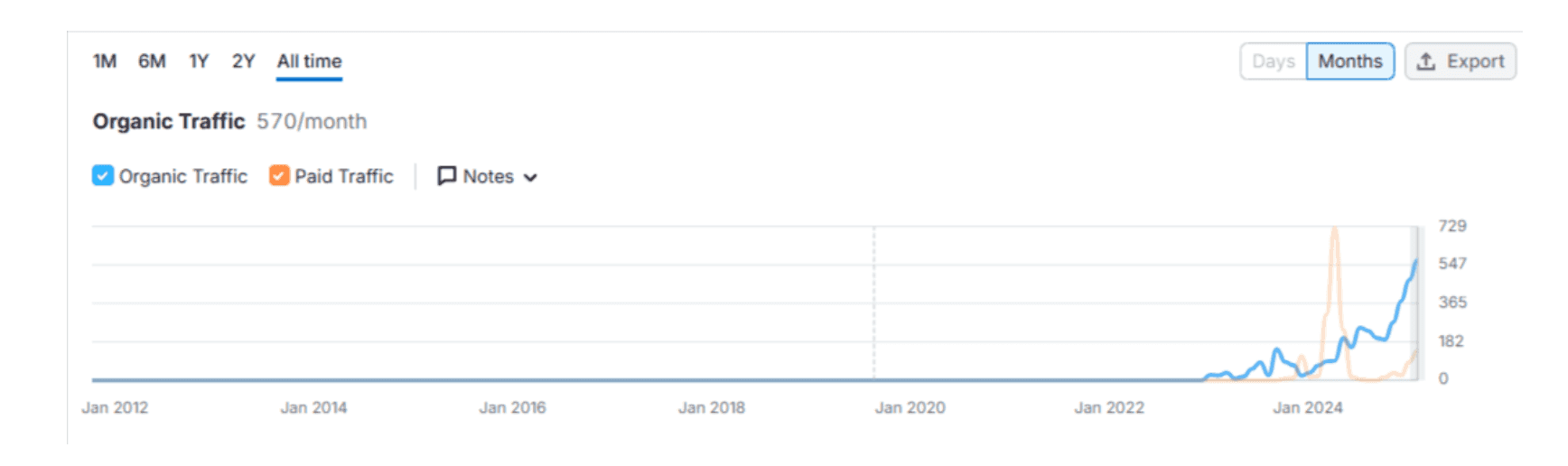
When this mid-sized Swedish e-commerce brand on Shopify reached out in late 2024, their organic visibility was almost non-existent. Only branded keywords were ranking, with no content strategy in place. Despite having a well-built store and decent product pages, they lacked three critical things: informational content to capture top-of-funnel searches, an internal linking structure to distribute authority, and backlinks from relevant Swedish sites to build domain trust.
The Challenge
This mid-sized Swedish e-commerce brand on Shopify had a well-built store and decent product pages. But organic visibility was almost non-existent. Only branded keywords were ranking. No content strategy existed at all.
Root Causes We Identified
- Zero informational content to capture top-of-funnel Swedish searches. The site was products-only
- No internal linking structure to distribute authority from any page to another
- No backlinks from relevant Swedish sites. Domain trust was low
- 42 duplicate meta tags across the site confusing Google about which pages to rank
- Sitemap included parameter URLs and other junk that diluted crawl budget
Tools & Platforms Used
Our Approach: 100-Page Content Hub + Technical Fix
Phase 1: Swedish Keyword Clustering (Month 1)
We clustered high-potential Swedish-language keywords by search intent. We identified over 250 target terms across five thematic clusters: hallbar skonhet (sustainable beauty), ekologisk kosttillskott (organic supplements), and three more verticals. Each cluster had a clear content plan mapping informational articles to commercial product pages.
Expert Insight
Swedish-language content competition is much lower than English. We found hundreds of keywords with 200-1,000 monthly searches where the top results were thin translated pages or generic health portals. A brand willing to create quality Swedish content can dominate these SERPs quickly.
Phase 2: Content Hub Launch (Month 2-4)
We launched 100 new informational pages: blogs and buying guides targeting long-tail Swedish queries. Every page was internally linked to relevant product and category pages. We built over 300 internal links total across the hub. The goal was to create a web of topical authority, not isolated content islands.
Phase 3: Technical Cleanup (Month 4-6)
- Fixed 42 duplicate meta tags that were confusing Google about page identity
- Cleaned up sitemap inefficiencies and removed parameter URLs
- Resolved URL parameter issues creating duplicate indexed content
- Implemented breadcrumb schema across all articles and subcategories
What We Found
The content hub started driving product page rankings before we even built any backlinks. Internal link authority from 100 well-interlinked articles pushed several product pages to Page 1 for commercial keywords. We didn't expect that to happen without external links, but the Swedish market competition was low enough that internal authority alone did the job.
What Didn't Work (And What We Learned)
Publishing all 100 articles without CTR-optimized titles
We focused so heavily on content quality and internal linking that we used descriptive but boring title tags for the initial batch. Impressions grew fast, but clicks lagged behind. The gap between +275% impressions and +83% clicks told the story. We went back and rewrote titles for the top 40 articles to be more click-worthy while keeping keyword targeting intact. CTR improved by about 30% on the rewritten titles.
Expert Insight
Impressions without clicks means your titles are not doing their job. Always optimize title tags for both keywords AND click-through rate. A ranking you don't get clicked on is a wasted ranking.
Skipping product page optimization in Phase 1
We planned to optimize product pages in a later phase. But as the content hub gained traction and pushed product pages higher in search results, those pages were showing up with default Shopify descriptions. Users clicked through from a well-written blog post to a product page with two sentences of generic copy. Conversion data showed these users bounced at a higher rate. We should have done basic product page optimization alongside the content hub launch.
The Results: Content Hub Performance
Headline Wins
- Content hub drove product page rankings to Page 1 through internal link authority alone
- Several product pages now rank for commercial keywords they never targeted directly
- Impression growth of +275% shows broad topical authority building across Swedish health searches
- Brand forecasted to 3-4x current traffic in the next phase with product page optimization and backlinks
Key Takeaway: How a Content Hub Builds Authority
A content hub is an authority engine, not a blog. When you build 100 interlinked articles around your product topics, the internal link authority compounds. Product pages start ranking for commercial keywords they never directly targeted. This effect is real, and it is strongest in markets like Swedish where content competition is low.
The EcomSEO Framework Applied
Cluster keywords by search intent and topic. Build a content hub of 100+ interlinked informational pages. Connect every article to relevant products through contextual internal links. Fix technical debt in parallel. Let the authority build on itself over time.
Tools & Platforms Used
Work Together With SEO Experts who understand ecommerce
World’s first Ecom-founded SEO agency