The Simple SEO Strategy That 7x’d Their Traffic
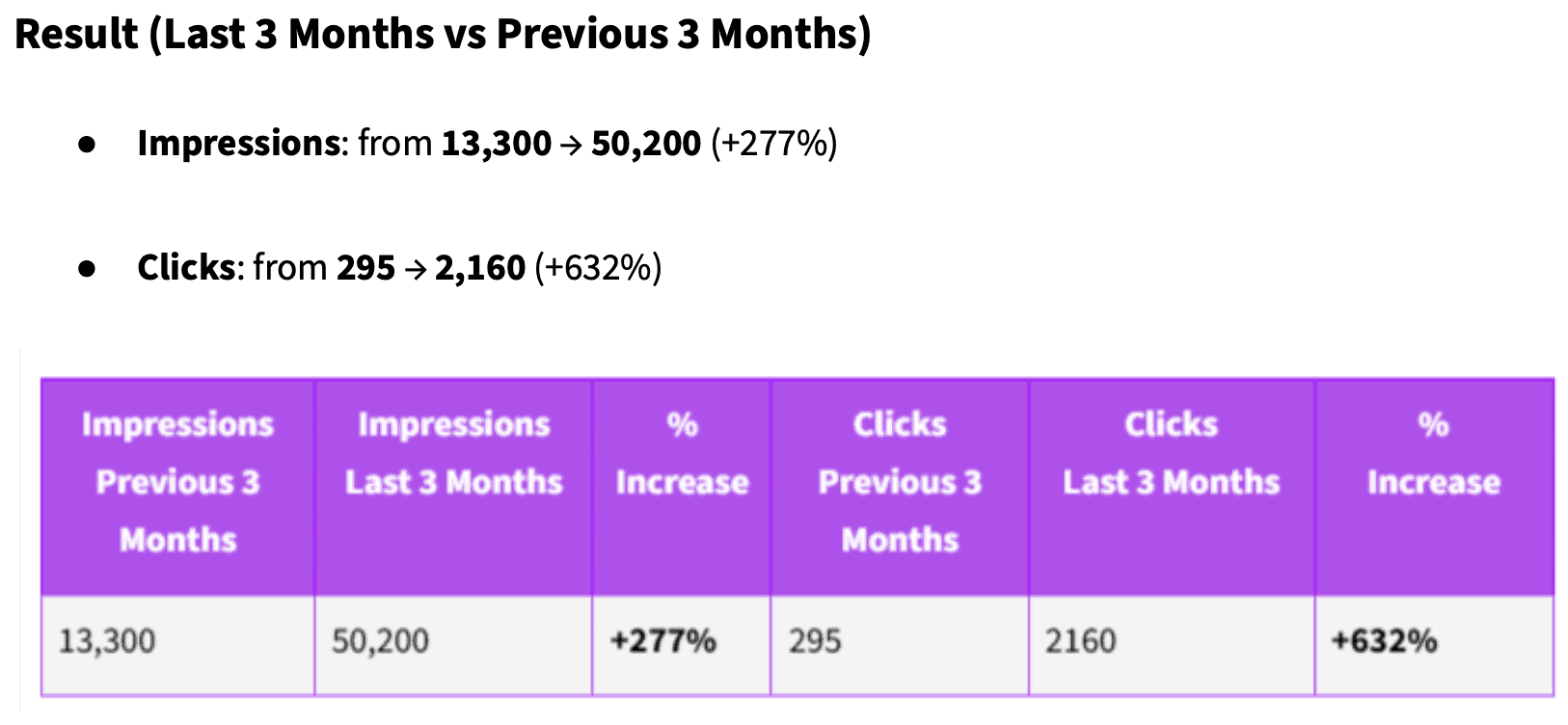
From 295 to 2,160 Clicks in 90 Days Without Creating a Single New Page
This US-based shapewear and bodysuits brand had been running on Shopify for 2 years with a strong product line and 45K Instagram followers, but their organic search was an afterthought. Despite having 200+ product pages and 15 collection pages, they were stuck at 295 organic clicks/month. No SEO had ever been done: default Shopify settings, auto-generated meta descriptions, no internal linking strategy, and title tags that were just product names like “Black Bodysuit Shapewear.” The site had 1,400+ URLs indexed (tag pages, paginated archives, collection filter pages) with only ~230 real pages. 3 separate pages were cannibalizing each other for “shapewear bodysuits.” They were spending $4,200/month on Meta ads as their primary growth channel.
The Challenge
This US-based shapewear and bodysuits brand had been running on Shopify for 2 years with a strong product line and 45K Instagram followers, but their organic search was an afterthought. No SEO had ever been done: default Shopify settings, auto-generated meta descriptions, no internal linking strategy, and title tags that were just product names. They were spending $4,200/month on Meta ads as their primary growth channel.
Root Causes We Identified
- 1,400+ URLs indexed including tag pages, paginated collection filters, and duplicate /collections/ URLs. Only ~230 were real pages worth indexing
- 3 separate pages cannibalizing each other for “shapewear bodysuits”, splitting click-through and confusing Google
- Title tags were bare product names like “Black Bodysuit Shapewear” with no search-intent keywords
- Product descriptions were 1–2 sentences of manufacturer copy with no unique value
- No internal linking strategy. 12 existing blog posts weren’t linked to any product or collection pages
- 14 unused Shopify apps injecting scripts and slowing load times (LCP at 4.8s)
Tools & Platforms Used
Our Approach: The Zero-Content Playbook
Phase 1: Index Cleanup & Speed (Weeks 1–2)
This site didn’t need more content. It needed the existing 200+ pages to actually work. We de-indexed 1,170 junk URLs (tag pages, collection filter pages, paginated URLs), consolidated 8 cannibalizing page pairs using 301 redirects, removed 14 unused Shopify apps, and compressed images site-wide, dropping LCP from 4.8s to 1.9s. The cleaned sitemap went from 1,400+ to just 234 real URLs.
Expert Insight
The biggest single win was index cleanup. Removing 1,170 junk URLs meant Google could focus 100% of crawl budget on pages that actually mattered. Within 2 weeks of submitting the cleaned sitemap, we saw crawl frequency on product pages increase by 4x.
Phase 2: On-Page Optimization (Weeks 3–4)
We rewrote SEO elements for every key page: optimized all 15 collection page titles with search-intent keywords, rewrote 85 product descriptions from 1–2 sentences to 150–250 words with sizing info, fabric details, and styling suggestions. We added FAQ schema to the top 20 product pages using real customer questions pulled directly from Zendesk support tickets.
What We Found
47 keywords were sitting at positions 11–20, the “striking distance” zone. These pages needed only minor optimization (better title tags, 1–2 internal links, slightly expanded content) to jump to Page 1. We prioritized these for the fastest ROI.
Phase 3: Internal Linking & Quick Wins (Weeks 5–8)
We built an internal linking map connecting products → collections → related products → blog. The 12 existing blog posts that weren’t linked to anything became link hubs to relevant product and collection pages. We added “Complete the Look” cross-sell sections to product pages for both UX and internal linking value.
Phase 4: Iteration (Weeks 9–12)
We re-optimized 12 pages based on Search Console impression data and identified 6 new collection pages to create based on actual search demand we discovered during the engagement.
What Didn’t Work (And What We Learned)
Not everything worked on the first attempt. Here’s what we had to course-correct.
Keeping Shopify tag pages indexed with nofollow links
Our initial strategy was to keep Shopify tag filter pages indexed but add nofollow to internal links pointing to them, hoping to preserve any existing rankings while reducing crawl waste. It didn’t work. Google continued crawling and indexing them, and they still diluted the site’s crawl budget. After 2 weeks of no improvement, we fully noindexed all tag pages. Crawl efficiency improved immediately.
First round of product descriptions was too keyword-stuffed
The first batch of rewritten product descriptions leaned too heavily on exact-match keywords. CTR actually dropped on those pages in weeks 3–4 because the meta descriptions read like SEO spam rather than compelling copy. We rewrote them with natural language, focused on USPs and customer benefits, and wove keywords in organically. CTR recovered and exceeded baseline within 2 weeks.
Expert Insight
Modern SEO copywriting needs to serve the click, not just the ranking. A page that ranks #5 with a 6% CTR outperforms a page that ranks #3 with a 2% CTR. Always write for humans first, then optimize for search engines.
The Results: 90-Day Transformation
Headline Wins
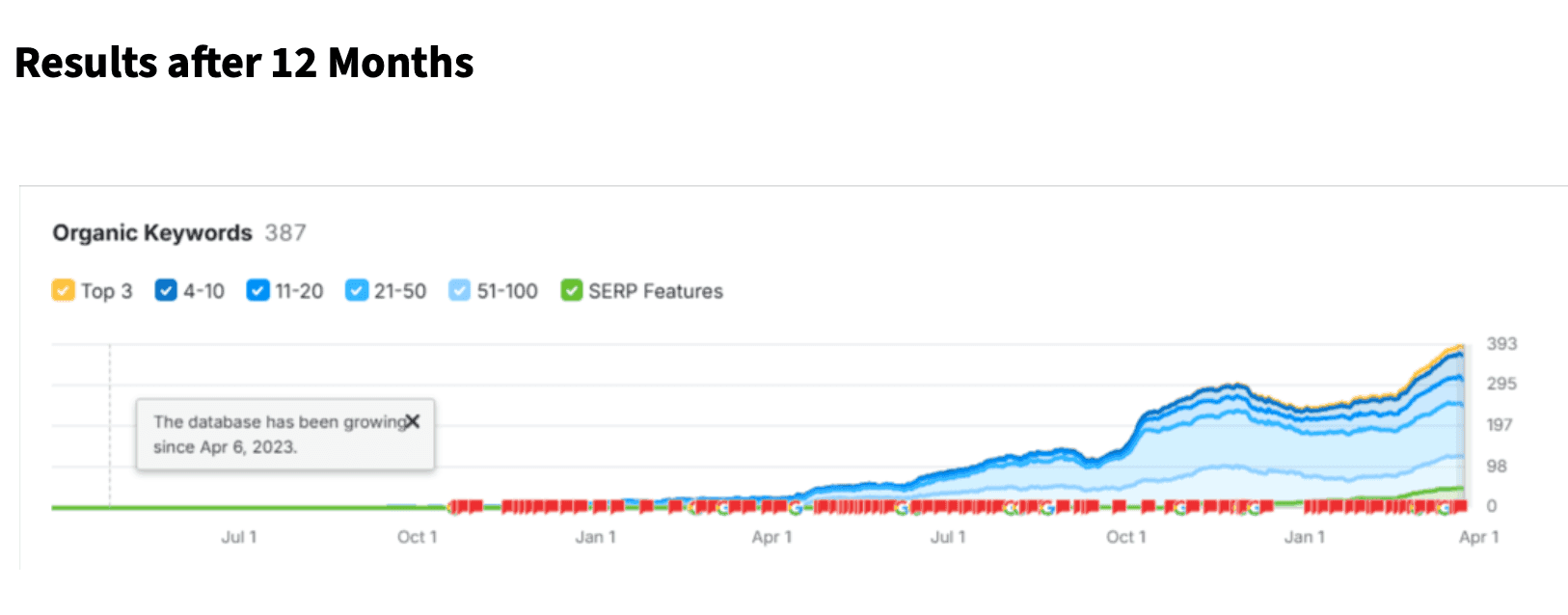
- Ranks on Page 1 for “shapewear bodysuits” and “tummy control bodysuit” with combined 2,400+ monthly searches
- 28 Page 1 keywords including 6 collection-level terms with 500+ monthly searches each
- Index bloat reduced , from 1,400 to 234 URLs
- CTR improved from 1.8% to 4.6% through title tag optimization alone
- $1,500/month reallocated from Meta ads to SEO maintenance
- No new content created during the entire 90-day . Pure optimization of existing pages
Key Takeaway: The Subtraction Principle
Sometimes removing is more powerful than adding. This site had 200+ real pages buried under 1,170 junk URLs, with cannibalization splitting their best keyword’s potential across 3 pages. By subtracting the noise (junk URLs, unused plugins, duplicate content) and amplifying the signal (better titles, richer descriptions, strategic internal links), we unlocked 7x traffic growth without creating a single new page.
The EcomSEO Framework Applied
Index cleanup → Cannibalization fixes → On-page optimization → Internal linking map → Striking distance targeting → Iterate with GSC data. This “Zero-Content Playbook” works for any Shopify or WooCommerce store with existing product pages that aren’t pulling their weight.
Tools & Platforms Used
Work Together With SEO Experts who understand ecommerce
World’s first Ecom-founded SEO agency