100+ Jewelry Collections Became a Search Magnet
How Category Architecture Transformed a Dutch Online Jewelry Store’s Organic Visibility
This Dutch online jewelry store had strong branding and a loyal customer base, but its organic traffic didn’t reflect its potential. The site suffered from a flat architecture with all products dumped into a few broad categories, missing internal linking logic, and , especially around thematic and seasonal collections. Customers searching for specific styles (“zilveren armband dames,” “verlovingsring vintage”) were finding competitors instead because the site had no dedicated pages for these queries.
The Challenge
This Dutch jewelry store had beautiful branding and repeat customers. Organic search was a different story. Products sat in a handful of broad categories, and Google had zero reason to rank them above competitors who had proper collection pages for every search intent.
Root Causes We Identified
- Flat architecture: all products dumped into broad categories like 'Armbanden' and 'Ringen' with no subcategories for style, material, or occasion
- No dedicated pages for high-intent Dutch queries like 'zilveren armband dames' or 'verlovingsring vintage' that competitors were already ranking for
- Internal linking between collections, products, and blog posts was basically non-existent
- Variant pages for size and color were creating duplicate content issues with no canonical tags in place
- Structured data was missing entirely: no Product schema, no breadcrumbs, no aggregate reviews
Tools & Platforms Used
Our Approach: Category Architecture Overhaul
Phase 1: Keyword Mapping & Architecture Planning (Month 1)
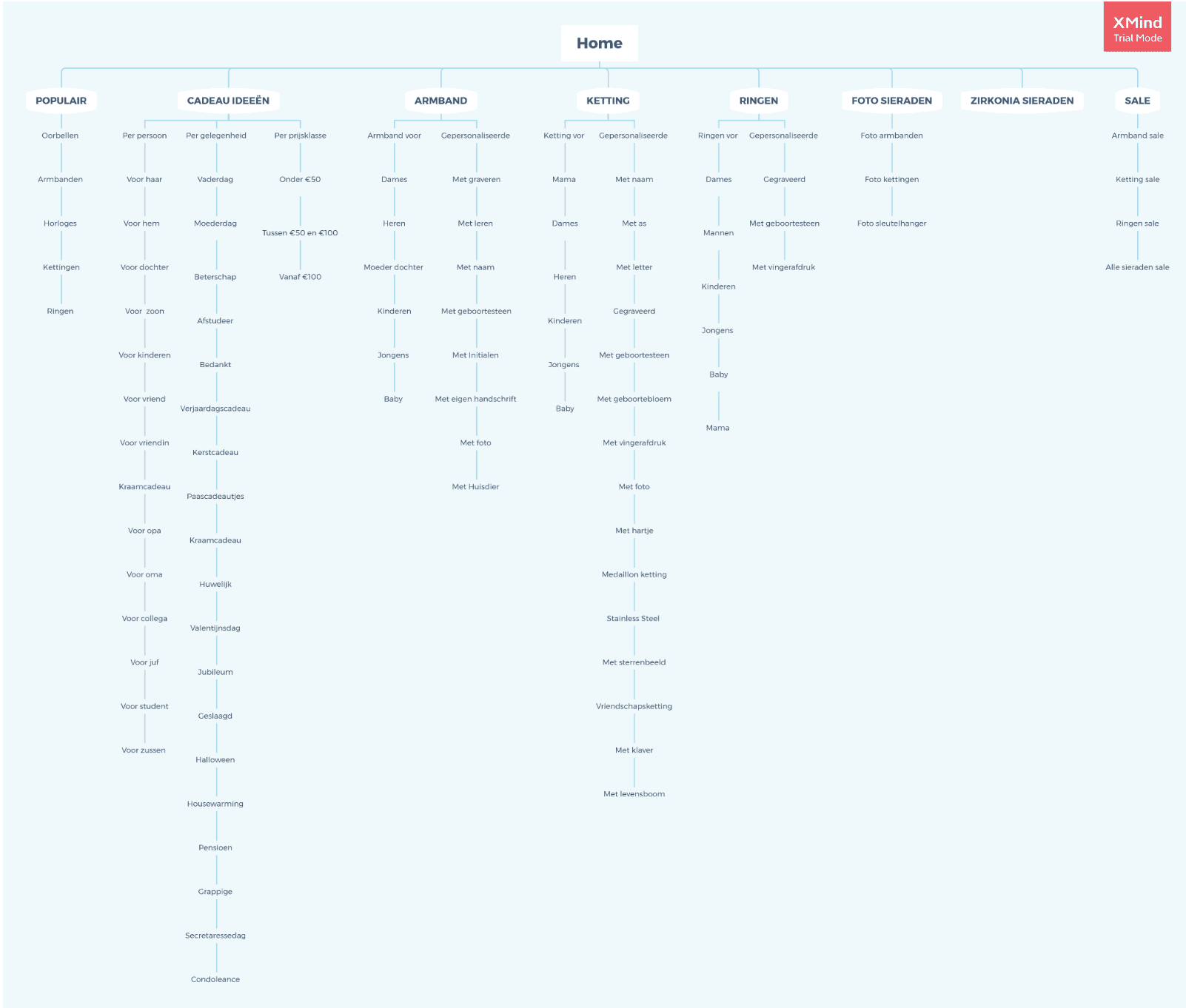
We mapped every commercial jewelry query in Dutch we could find. Then we organized them into three axes: product style (minimalist, vintage, statement), material/type (silver, gold, gemstone), and occasion/search behavior (engagement rings, birthday gifts, everyday jewelry). This gave us a plan for 100+ new collection pages. Each one targeted a specific cluster of search intent.
Expert Insight
The three-axis approach was the real unlock here. A single ring can appear in 'zilveren ringen,' 'minimalistische sieraden,' and 'verlovingsringen' simultaneously. This multiplied our ranking surface without creating thin pages.
Phase 2: Collection Page Buildout (Month 2-3)
We launched over 100 new collection pages. Each one got unique Dutch content, targeted metadata, internal links to relevant products and related collections, plus structured data for reviews, breadcrumbs, and product availability. These were real landing pages with buying guidance, styling tips, and care instructions. Not keyword-stuffed placeholders.
Phase 3: Technical Cleanup & Internal Linking (Month 3-4)
- Implemented canonical tags across all variant pages to stop duplicate content from diluting rankings
- Rebuilt the sitemap to include only canonical collection and product pages
- Optimized mobile page speed for the image-heavy jewelry design
- Connected products, blogs, and collections through a logical internal linking hierarchy
Discovery
Image-heavy jewelry pages were loading at 5+ seconds on mobile. Compressing product images and implementing lazy loading cut load times by 60%. Google started crawling the new collection pages much faster after this fix.
What Didn't Work (And What We Learned)
Launching all 100+ collection pages at once
We initially tried to push every new collection page live in a single batch. Bad idea. Google's crawl rate couldn't keep up. About 40% of the pages sat unindexed for three weeks. We switched to batched launches of 15-20 pages per week with manual indexing requests. The indexing rate jumped to 90% within 5 days of each batch.
Expert Insight
Batch your page launches. Google has a crawl budget, and flooding it with 100+ new URLs at once means many will sit in the queue for weeks. Smaller batches with indexing requests get you ranking faster.
Auto-generated collection descriptions from product attributes
To save time, we built a template that pulled product attributes (material, style, price range) into collection descriptions automatically. The output was technically accurate but read like a spreadsheet. Bounce rates on template-generated pages were 31% higher than hand-written ones. We went back and rewrote every collection description manually in natural Dutch. Took an extra week but the engagement metrics improved right away.
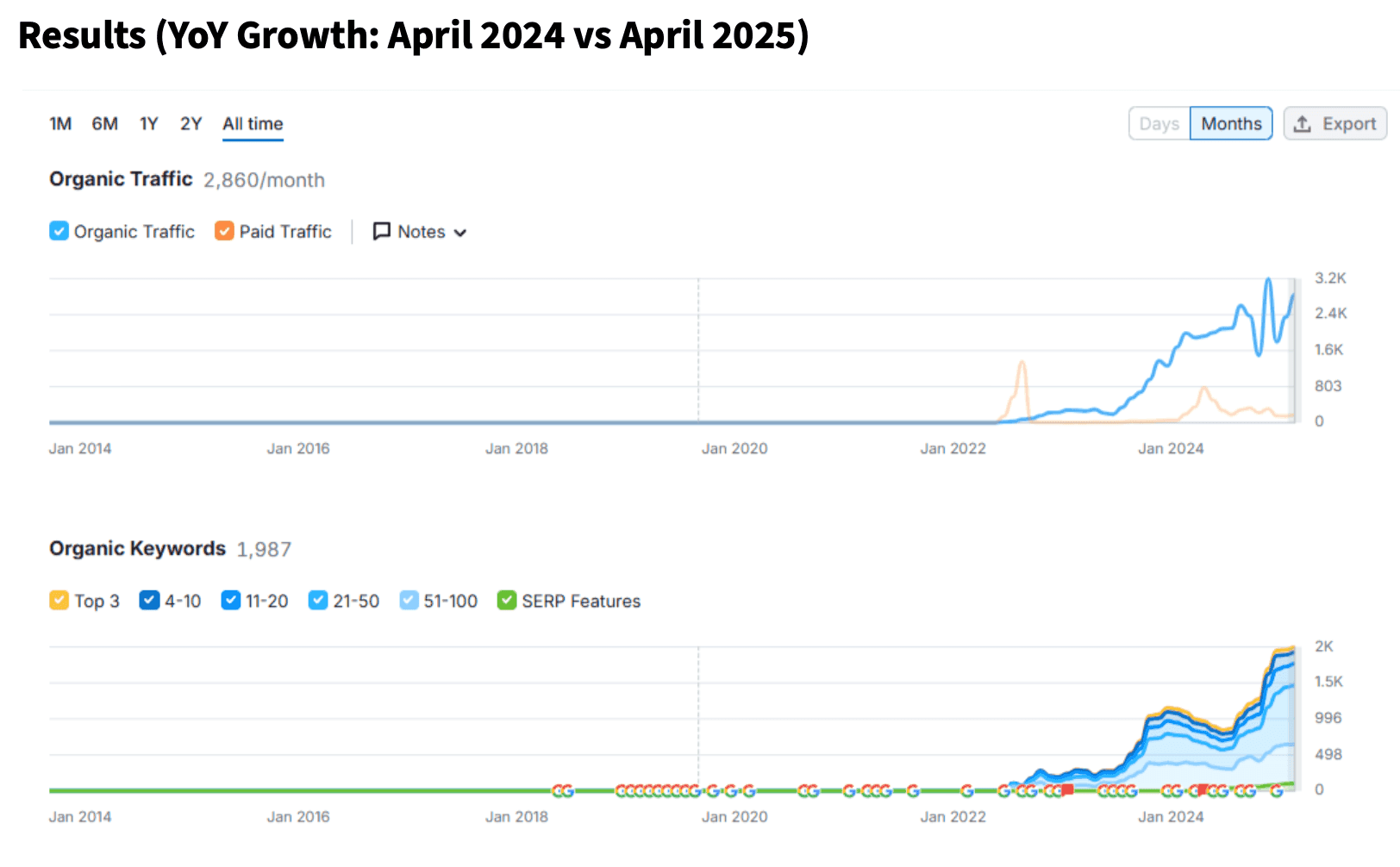
The Results: Architecture-Driven Growth
Headline Wins
- Ranking for 'zilveren armband dames,' 'verlovingsring vintage,' 'gouden ketting heren' and dozens more high-intent Dutch queries
- Collection pages now capture search intent across the full buying journey from browsing to purchase
- Structured data drove rich results for product availability and reviews in Dutch SERPs
- Category architecture turned the site from a flat catalog into a proper search magnet
Key Takeaway: The Multi-Axis Category Principle
Jewelry e-commerce has a unique advantage: a single product can legitimately belong to multiple categories. A silver minimalist engagement ring fits into style, material, and occasion categories all at once. Most jewelry stores waste this by using flat navigation. Build your categories around how people actually search, not how your warehouse is organized.
The EcomSEO Framework Applied
Map search intent to three category axes (style, material, occasion). Build dedicated landing pages for each intersection. Connect everything with internal links. Add structured data. Clean up technical debt. Let Google do the rest.
Tools & Platforms Used
Work Together With SEO Experts who understand ecommerce
World’s first Ecom-founded SEO agency