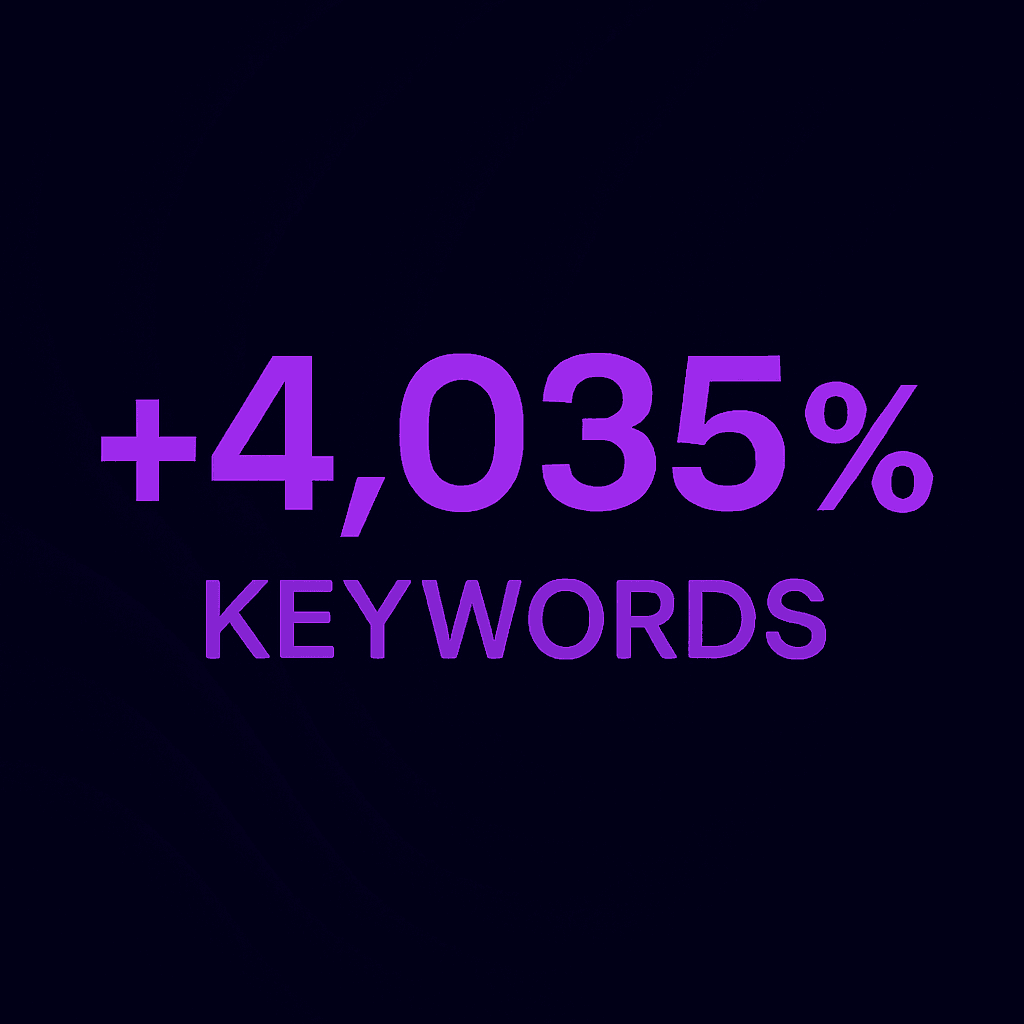
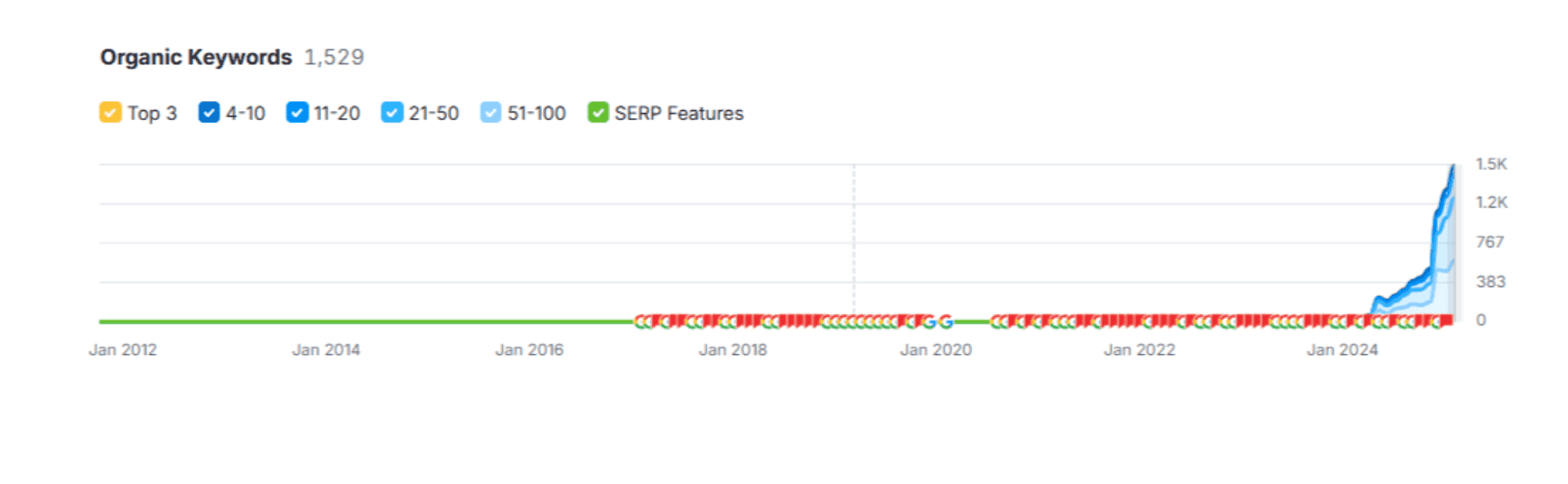
From 37 to 1,529 Keywords in 6 Months
How We Built Topical Authority from 37 Keywords to 1,529 in the Swedish Health Market
In May 2024, this Swedish ecommerce brand had minimal organic visibility: just 37 keywords ranking with only one in the top 10, no content hub, no internal linking structure, and no backlink strategy. Growth was flat and the brand was entirely dependent on paid acquisition. We set out to build topical authority in the Swedish health and wellness space and transform their organic channel into a meaningful revenue driver within 6 months.
The Challenge
37 keywords. That was it. This Swedish health and wellness brand had one keyword in the top 10, no content hub, no internal linking, and no backlink strategy. Growth was flat. Every sale came from paid ads.
Root Causes We Identified
- No content beyond product pages. Zero informational articles, guides, or resources
- No internal linking structure connecting pages to each other. Products, categories, and the homepage existed as isolated islands
- No backlink strategy. The domain had almost no external links from relevant Swedish sites
- 42 duplicate meta tags creating confusion about page identity and purpose
- URL parameter issues generating duplicate indexed content that wasted crawl budget
Tools & Platforms Used
Our Approach: Keyword Clustering + Content Architecture
Phase 1: Deep Swedish Keyword Clustering (Month 1)
We mapped over 250 Swedish search terms into five high-intent thematic clusters: hallbar skonhet (sustainable beauty), ekologisk kosttillskott (organic supplements), naturlig hudvard (natural skincare), vegansk halsa (vegan health), and miljovanlig livsstil (eco-friendly lifestyle). Each cluster became a content silo with its own pillar page and supporting articles.
Expert Insight
The five-cluster approach let us build topical authority across the full Swedish health space rather than going deep on one topic and hoping for the best. Google rewards breadth when you back it up with depth in each cluster.
Phase 2: 100+ Article Launch (Month 2-4)
We launched 100+ well-researched articles targeting long-tail Swedish queries. Each article was connected to the product catalog through contextual internal links. Over 300 internal links total. The articles were not fluff pieces. Each one answered a specific Swedish search query better than anything else on page 1.
Phase 3: Technical Foundation (Month 4-6)
- Cleaned up 42 duplicate meta tags across the entire site
- Fixed sitemap inefficiencies so Google only crawled real pages
- Resolved URL parameter issues creating duplicate content
- Implemented breadcrumb schema across all articles and subcategories
- Set up FAQ schema on key articles to target SERP features
What We Found
We tracked which content clusters drove keyword growth fastest. The 'ekologisk kosttillskott' (organic supplements) cluster outperformed everything else by 3x in keyword acquisition speed. The reason: this sub-niche had almost zero quality Swedish content. We essentially owned the entire topic within 8 weeks of publishing.
What Didn't Work (And What We Learned)
Spreading internal links evenly across all products
Our initial internal linking strategy distributed links evenly across all product pages. Democratic, but wrong. Some products had far more search demand than others. We wasted link equity on products nobody was searching for. When we shifted to a weighted approach, concentrating internal links on high-demand product pages, those pages jumped 10-15 positions within three weeks. The low-demand pages didn't drop at all.
Expert Insight
Not all products deserve equal internal link authority. Concentrate your linking on pages with actual search demand. Use GSC impression data to identify which products Google is already trying to rank, and give those pages more internal support.
Writing articles at inconsistent quality levels
With 100+ articles to produce, we used multiple writers. Quality varied. Some articles were thorough 2,000-word guides. Others were thin 500-word pieces that barely scratched the surface. The thin articles indexed but didn't rank. We identified the 25 weakest articles by performance data and rewrote them to match the quality standard of the top performers. Rankings improved on 18 of the 25 within a month.
The Results: Topical Authority at Scale
Headline Wins
- From 1 top-10 keyword to 87 in six months. That is a completely different organic presence
- 53 keywords appearing in SERP features including FAQs, featured snippets, and product carousels
- The content hub made every new article boost related product page rankings, and the effect kept growing
- The brand now has a real organic channel instead of 100% dependence on paid acquisition
Key Takeaway: The Topical Authority Compound Effect
Topical authority compounds. Article 1 helps article 2 rank. Article 50 makes articles 1-49 rank better. By article 100, you own the topic in Google's eyes. This works especially well in Swedish because the competition for quality informational content is so thin. Brands that invest in native-language content hubs get outsized returns compared to English markets.
The EcomSEO Framework Applied
Cluster keywords into 5 thematic silos. Build 100+ articles distributed across all clusters. Connect every article to products through contextual internal links. Fix technical debt so Google can crawl efficiently. Let topical authority compound over time.
Tools & Platforms Used
Work Together With SEO Experts who understand ecommerce
World’s first Ecom-founded SEO agency